Bright ideas for better office lighting! Discover how the right lighting can boost productivity, wellbeing, and transform your workspace.

By Making Moves London
May 20, 2025
When designing a new office space, lighting might not be the first thing on your checklist, but it’s certainly a key factor to consider in the design of your space. Office lighting is about more than being able to see your work in front of you – it influences everything from employee productivity and wellbeing to the overall ambience of the workplace. The right lighting can energise your team, reduce eye strain, and create a professional yet welcoming environment, while poor lighting can cause fatigue, headaches, and even impact focus.
In this post, we’ll explore why lighting plays a bigger role in workplace success than you might expect, how to assess whether your office lighting is up to standard, and actionable solutions to optimise light levels and maximise natural light in your office.

So, let’s dive right in—why is office lighting so important? Good office lighting is essential for maintaining a productive, comfortable, and efficient workspace. It affects multiple aspects of workplace performance, including:
Well-lit environments help employees stay alert, focused, and efficient throughout the workday. Sufficient lighting ensures that tasks can be completed accurately and with ease, reducing errors and increasing overall output.
In fact, a study by Cornell University found that employees who sat near sources of natural light, such as windows, experienced a 56% decrease in drowsiness, helping them stay more engaged and productive for longer periods. By optimising office lighting—whether through natural light or well-placed artificial lighting – businesses can create a workspace that enhances both concentration and efficiency.
Proper lighting can reduce stress and improve overall employee satisfaction. Bright, natural-looking light fosters a positive work atmosphere, preventing sluggishness and boosting morale.
Neina, founder of Make Light Matter, emphasises the powerful link between lighting and mental wellbeing in the workplace:
“Like air, water and food, light is an essential nutrient that drives our brain chemistry and hormonal processes, powering our mood and energy every day. To support your employees to be happy, healthy and productive year-round, you can supplement natural light with thoughtful artificial light options. Offering individuals the freedom to meet their own needs, for example by moving around spaces and offering local controls, makes this even more powerful.”
By prioritising high-quality lighting, businesses can create a workspace that not only supports productivity but also nurtures employee happiness and long-term wellbeing.
Exposure to well-balanced lighting plays a crucial role in regulating sleep cycles and energy levels, helping employees maintain a healthy work-life balance. Our circadian rhythm—the body’s internal clock—thrives on consistent light cues, whether from natural daylight or high-quality artificial lighting.
Circadian rhythm is also strongly associated with Seasonal Affective Disorder (SAD), which affects around 2 million people in the UK each year. By ensuring workplaces are well-lit with the right intensity and colour temperature, businesses can help employees sustain steady energy levels, improved focus, and an overall positive mood throughout the day.
Adequate lighting reduces workplace hazards and prevents accidents, especially in areas like stairways and corridors. Poor lighting can lead to trip hazards and difficulty navigating spaces safely, such as shared workspaces.
For example, well-lit stairwells help prevent missteps, while evenly distributed lighting in open-plan offices reduces shadowed areas that can lead to accidents.
A well-lit office enhances the professional appearance of the workspace, making it more inviting for employees and visitors alike. Clients and business partners will perceive a bright and welcoming office as a sign of a well-managed, forward-thinking company.

While good lighting brings numerous benefits, inadequate lighting can lead to significant challenges in the workplace. A poorly lit office can affect both employee wellbeing and overall business performance, causing everything from decreased focus to long-term health issues.
Employees working under dim or flickering lights may experience discomfort, leading to reduced focus and increased breaks to rest their eyes. Over time, this can cause chronic fatigue and decreased motivation, resulting in a decline in work quality and efficiency.
Inconsistent or overly harsh lighting can contribute to stress and physical discomfort, making it harder to concentrate and leading to frustration and tension among staff. Bright, glaring lights can be just as problematic as dim lighting, with the NHS noting that exposure to harsh lighting can trigger migraines. This added strain can increase mental exhaustion and lower workplace morale.
Without proper lighting, employees may struggle to complete tasks effectively, leading to decreased productivity and engagement. Tasks that require detail-oriented work may take longer, resulting in lost time and potential mistakes. Inadequate lighting can also lead to an increase in workplace errors, further impacting business performance and outcomes.
Lighting can greatly impact workplace performance, but not all sources of light are created equal. Different types of lighting have unique advantages and drawbacks, making it essential to choose the right combination for your office.
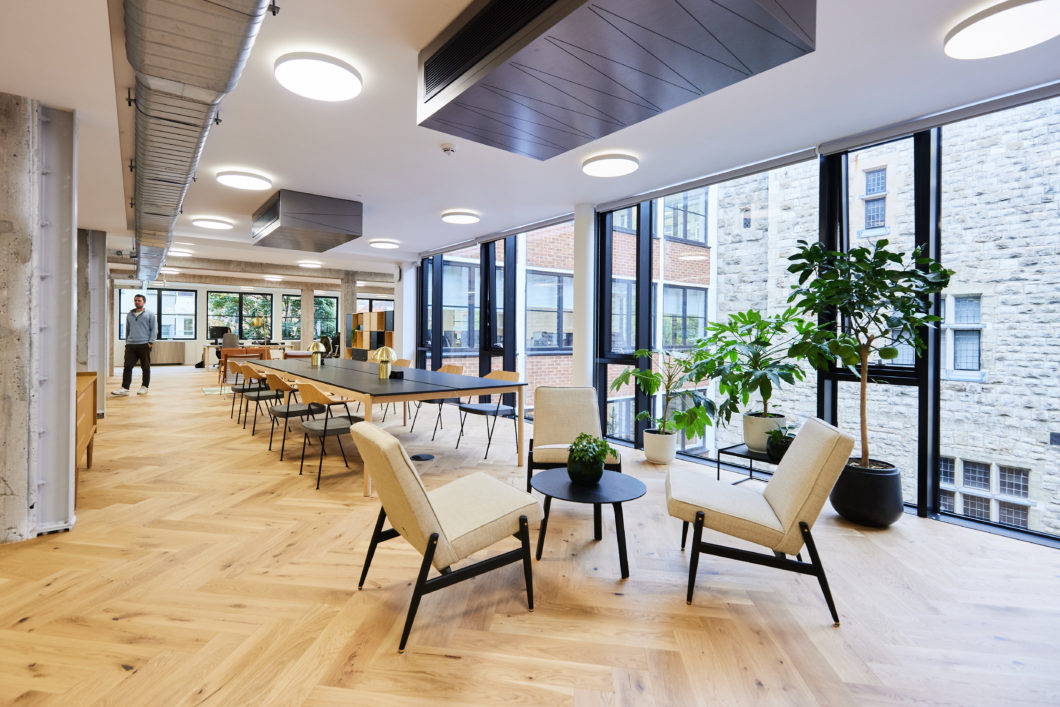
Let’s explore two key factors: the type of light source and the colour temperature.
Natural Light – The gold standard of lighting, helping to regulate mood, energy levels, and productivity. Offices designed to incorporate large windows and open spaces benefit significantly from natural daylight. Studies have shown that exposure to natural light can reduce stress and improve sleep quality, leading to a healthier and more productive workforce. It’s also the cheapest!
LED Lighting – Energy-efficient and long-lasting, LED lights provide bright and consistent illumination with lower heat emissions. They are widely preferred for office settings due to their reliability, reduced maintenance costs, and the ability to control brightness and colour temperature for different work areas.
Fluorescent Lighting – A common choice in office spaces, but it can cause flickering and discomfort if not properly maintained. Fluorescent bulbs tend to have a colder and harsher light quality, which may contribute to headaches and eye strain over time. Supplementing them with warmer lighting solutions can help balance the lighting environment.
As Phil Snowden, Senior Property Advisor explains:
“We always encourage clients to consider a mix of natural light and energy-efficient solutions like LEDs to create a balanced and comfortable environment. Thoughtful lighting design isn’t just about aesthetics – it directly affects how employees feel, focus, and perform in their workspace. Investing in adaptable lighting solutions, such as dimmable LEDs or task lighting in key work areas, helps businesses create a workspace that enhances productivity, reduces eye strain, and keeps energy costs low.”
Whether incorporating more natural light, upgrading to LEDs, or balancing fluorescent lighting, businesses should carefully consider how their office lighting impacts both employee wellbeing and workplace performance.
The colour temperature of light, measured in Kelvin (K), influences the mood and effectiveness of a workspace. Here’s how different temperatures work best in various office areas:
Cool White (4000K-5000K) – Ideal for focus-driven tasks, commonly used in general workspaces where concentration and productivity are key. This range provides bright, neutral lighting that reduces eye strain and enhances clarity.
Warm White (2700K-3000K) – Provides a more relaxed and inviting atmosphere, best suited for break rooms, lounges, and meeting spaces where discussions and collaboration take place. Warm white light helps create a comfortable environment, reducing stress and promoting engagement.
Daylight (5000K-6500K) – Mimics natural daylight and works well in creative and design-focused environments where colour accuracy and visual clarity are important. This range is particularly beneficial for graphic designers, architects, and other professionals who rely on true-to-life colour representation.
By carefully selecting both the type of light source and the appropriate colour temperature, businesses can create a well-balanced lighting environment that supports productivity, comfort, and overall workplace wellbeing.

So, now that you know just how important light is for the productivity and comfort of your team; you’ll likely want to know whether the light levels in your office are up to standard. Checking if your office lighting is adequate is easier than you might think.
One of the simplest ways to assess brightness is by using a lux meter, many of which are available as smartphone apps. These tools measure the intensity of light in different areas of your office and help ensure optimal conditions.
According to the UK’s Health and Safety Executive (HSE), different activities at work will require different levels of light.
For general office work, aim for 300-500 lux, while more detailed tasks like technical drawing require 750-1000 lux. Corridors and stairwells, where visibility is still important but not the primary focus, should be around 100-200 lux.
To use a lux meter, simply open the app, place your phone at desk level, and take readings in multiple locations. If some areas fall below recommended levels, consider repositioning lights, adding task lighting, or maximising natural light to improve overall illumination.
Another effective way to assess lighting is by gathering employee feedback. If team members frequently report eye strain, headaches, or fatigue, it may indicate poor lighting conditions that need to be addressed. Conducting informal check-ins or surveys can provide valuable insights into problem areas and guide improvements.
If your current lighting setup isn’t optimal, here are some practical tips to help you improve it from the experts here at Making Moves:
Maximise Natural Light – Natural light boosts mood, reduces eye strain, and improves productivity. Position desks near windows where possible, and use mirrors or reflective surfaces to help distribute daylight more effectively. Skylights or glass partitions can also bring in additional sunlight, making the space feel open and energised.
Layer Your Lighting – A well-lit office combines different types of lighting to create a comfortable and functional space. Use ambient lighting (overhead lights) for general brightness, task lighting (desk lamps) for focused work, and accent lighting to highlight areas such as breakout spaces or meeting rooms. This layered approach ensures the right lighting for different tasks and activities.
Invest in Smart Lighting Solutions – Automated lighting systems adjust brightness based on occupancy and daylight levels, creating a more energy-efficient and adaptable workspace. Motion sensors and dimmable LEDs allow for customisation, reducing unnecessary energy use while keeping employees comfortable throughout the day.
Reduce Glare and Shadows – Harsh lighting and shadows can cause eye strain and discomfort. Use diffused lighting or indirect light sources to soften brightness, and position screens and desks to minimise glare from overhead lights and windows. Anti-glare screens and adjustable blinds can also help control brightness levels throughout the workday.
Regular Maintenance – Flickering lights or outdated fixtures can negatively impact both concentration and energy efficiency. Conduct routine checks to ensure all bulbs are functioning properly, and consider upgrading to LED lighting, which lasts longer, consumes less energy, and provides more consistent brightness than traditional options.

At Making Moves, we worked closely with the international advertising agency Innocean to create a workspace that maximised natural light and enhanced functionality. As a creative agency, lighting was not just about productivity – it was crucial for fostering creativity and ensuring their team could work in an inspiring environment. Additionally, the space needed to impress clients, making lighting a key element in shaping a striking and inviting office.
Innocean’s new West End headquarters was designed to maximise natural light, creating an inviting and productive environment. Floor-to-ceiling windows ensured daylight reached deep into the office, while glass walls for meeting rooms helped light flow throughout the space, making enclosed areas feel more open. A mix of warm ambient lighting and task lighting was introduced to ensure a comfortable and adaptable workspace, reducing eye strain, enhancing collaboration, and setting the right atmosphere for creative brainstorming sessions.
Explore more of our success stories in our case study archive to see how we’ve helped businesses transform their work environments.
At Making Moves, we don’t just help businesses find office space—we make sure it works for them. Whether you’re relocating, optimising, or downsizing, we provide expert guidance to ensure your workspace supports productivity, wellbeing, and business growth.
From office search and relocation consultancy to project-managing complete office fit-outs, we handle every step of the journey. We also assist with lease exits, helping businesses navigate building surveys, dilapidations, and early lease terminations while minimising costs.
Moving offices can be a complex and stressful process, but partnering with Making Moves makes it seamless. With our expertise, experience, and strong industry relationships, we negotiate the best terms, streamline the process, and ensure you get a workspace that’s fit for the future.
Lighting is just one part of what makes a great office, but every detail matters when it comes to creating a space that works for your business. Whether you’re moving to a new office, reconfiguring your existing space, or planning a full-scale fit-out, Making Moves can help you achieve a workspace that boosts productivity, enhances wellbeing, and impresses your clients.
If you’re ready to take the next step, get in touch with our team today. For more expert insights, check out our guide to mastering office acoustics or find out how much an office fit-out really costs to plan your next move.