What is agile working and how does it differ from flexible working? Our guide helps you work more effectively.

By Making Moves London
March 10, 2026
As businesses continue to evolve post-pandemic, agile working has moved from a stereotypical buzzword to an essential boardroom strategy. In 2025, facilities managers, HR leads, and senior decision-makers are increasingly exploring agile work environments that prioritise flexibility, productivity, and wellbeing.
This guide introduces the meaning, benefits, and practical implementation of agile working to help leaders decide if it’s the right move for their organisation.
Key Takeaways
Agile working is a modern approach to workplace strategy that allows employees to work anytime, any place, anywhere, provided they meet clear goals and outcomes. It brings together people, processes, and technology to create an agile work environment where efficiency and adaptability is allowed to thrive instead of being suppressed through old fashioned tactics and rigid rules.
While agile working seems like a free-for-all style of operations to begin with, if implemented and integrated correctly, staff will discover that agile working offers freedom but within a strategic framework. It focuses on how work is delivered most effectively, instead of just “where” or “when” work happens.
At its core, agile working is about enabling teams to work smarter, not harder.
Before adopting agile working for your business, it’s crucial to understand the distinctions:
While often used interchangeably, these models have different goals and resulting impacts on a business.
| Approach | Agile Working | Flexible Working | Hybrid Working |
| Primary focus | How work is done | When work is done | Where work is done |
| Goal | Outcomes/performance | Schedule flexibility | Location flexibility |
| Approach | Strategy-driven | Individual preference | Pre-defined split |
| Type | Transformational | Transactional | Transactional |
| Employee empowerment | High | Medium | Medium |
Agile working supports individual choice within organisational goals. This offers a powerful solution for businesses ready to evolve beyond fixed routines and can be a hugely contributing factor to overall business success.
The “When? Where? What? Who?” framework helps businesses define their agile ways of working:
Helps businesses move away from fixed hours to trust-based, output-driven timeframes. This allows employees to essentially work when they prefer to, within companies guidelines.
Enables companies to adopt remote, in-office, and third-space work environments based on employee needs.
Businesses focus on overall deliverables, priorities, and outcomes instead of day-to-day tasks and micro-management.
Clarify roles, responsibilities, and collaboration pathways, which removes any duplication and confusion over who is in charge of certain tasks.
Agile working thrives when this 4-point system is clear and transparent, communicated fully across the business from directors to new recruits, and is supported fully by all employees.

In a 2024 report on the State Of Agile Marketing, 98% of marketers rated the implementation of agile working as successful. So what are the benefits of agile working and positive impact on a business.
1. Aligns With Employee Expectations
The demand for flexibility is higher than ever. 87% of people want flexible working arrangements, yet many organisations still lag behind in offering them. Agile working helps bridge this gap, meeting modern expectations and enhancing overall satisfaction.
2. Attracts and Retains Top Talent
When considering a new role, 71% of employees say flexible working patterns are essential. Employers agree, with 42% reporting an improved ability to attract new hires with agile or flexible options. For candidates globally, nearly 40% rank workplace flexibility in their top three job factors.
3. Drives Engagement & Motivation
According to research conducted by McKinsey and Co., 73% of agile organisations report better employee engagement, while the 2nd International State of Agile HR report found that motivating current employees was the number one reason businesses adopt agile methods. Agile teams are typically more invested, more empowered, and more aligned with company goals.
4. Enhances Performance & Productivity
Building a strong agile culture leads to a 277% increase in commercial performance, states a recent report, while agile teams using full Scrum methods deliver 250% better quality than teams with no structured approach.
5. Supports Neurodiversity & Different Workstyles
Agile neurodiversity workplaces cater to diverse cognitive needs, offering both energising areas for collaboration and quiet zones for deep focus. This supports neurodivergent team members, working parents, and others with unique preferences.
6. Encourages Movement & Healthier Workdays
Agile layouts encourage employees to move between zones throughout the day, moving from, for example, desks or booths to lounge areas and standing spaces. This helps to combat sedentary routines and increase energy and engagement.
7. Improves Productivity & Retention
A study found a 30% increase in productivity after shifting to agile practices. BT also achieved a 99% maternity return rate, compared to the national average of just 47%, which shows how agile environments support long-term employee loyalty.
8. Improves Customer & Operational Outcomes
Agile working doesn’t just benefit internal teams. 93% of agile organisations report higher customer satisfaction, and the same percentage reported better operational performance compared to non-agile teams. This shows how closely employee wellbeing links to broader business success.
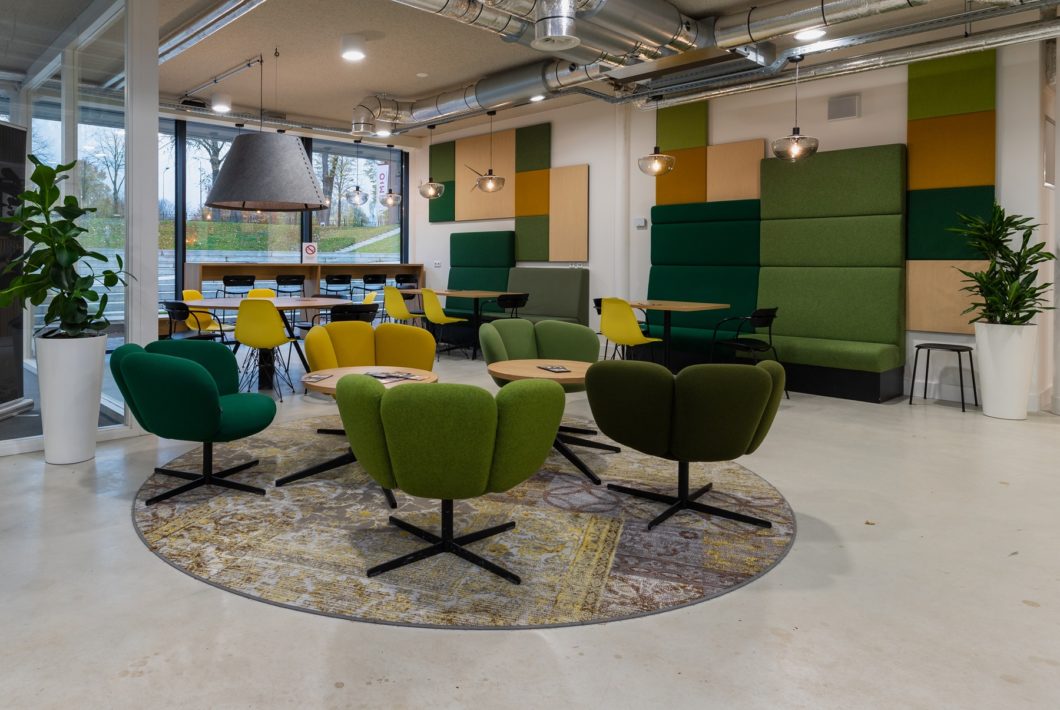
A successful agile work environment is built on activity-based design. Instead of fixed desks, employees choose from zones that suit their current task:
Enabling workers to also work from home not only allows your employees to work where they prefer, but hot-desking systems and digital booking tools, that manage usage and availability, can also reduce costs by up to 30%. This is an added bonus when recent reports state that 83% of workers around the globe prefer a hybrid work model.

Agile working only works with the right technology in place. Essentials include:
Agile working depends on more than just policy, it requires a mindset shift from all:
Workspaces must support both flexibility and focus. Key design elements include:
An agile working approach will only be impactful if it is implemented correctly. Here is a quick step-by-step guide to make sure your new way of working is effective from the outset.
1. Start With A Pilot
Trial agile working in one department or location to test its effectiveness. This is especially important when managing large teams. If the new strategy becomes ineffective or worse, detrimental, to one department, it can be controlled and rectified much easier than if the whole office took on the new approach.
2. Train Managers On Outcome-Based Leadership
Equip leaders to focus on results, not hours at a desk. Hours at a desk does not translate to results. Only results translate to results.
3. Set Clear Behavioural Expectations
Communicate what is and is not expected in the new way of working. It’s important that the boundaries of your agile working approach are agreed upon beforehand.
4. Implement Space Booking Systems
Support freedom with structure using digital booking and management tools.
5. Gather Feedback & Iterate
Regularly check in with staff, assess what’s working, and refine your approach. The best working environments and strategies are the ones that continue to evolve with input from all levels.
An agile workspace is about creating an environment where people can do their best work, supported by thoughtful design and clear metrics. Success can be measured by both how the space performs and how employees feel. Here are a few things to look out for if your agile working approach is working how it should:
It’s important that you do not implement an agile working approach and then treat it as gospel. Agile working approaches must adapt to changing workforces, technologies, and expectations. Businesses looking to future-proof their working model should consider the following:
Agile working is still a relatively new concept for many businesses, but judging by the continued increase in the adoption of the approach, it’s safe to say that it’s here to stay.
With deep expertise in workspace strategy and office relocation, Making Moves can help your company define and implement an agile working office space tailored to your people, your goals, and your growth. Get in touch with us to find your new agile workspace today.